





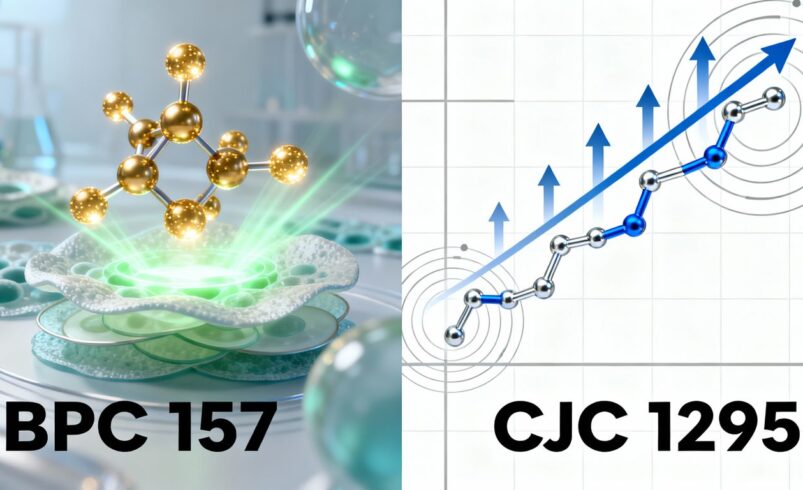

So, you’re curious about BPC 157 versus CJC 1295, huh? It’s a common question these days, especially with so many people looking into ways to heal faster or boost their performance. Both are peptides, but they do pretty different things. Think of it like comparing a specialized repair crew to a general contractor who also handles the electrical. Understanding what each one is best for, how they work, and what you might expect is key. Let’s break down the bpc 157 vs cjc 1295 debate so you can get a clearer picture.
Key Takeaways
- BPC 157 is mainly for healing tissues, like tendons, ligaments, and the gut. It seems to help cells repair themselves and grow new blood vessels.
- CJC 1295 works differently; it tells your body to release more growth hormone. This can help with sleep, recovery, and potentially fat loss and muscle gain.
- When it comes to safety, BPC 157 is generally seen as having low toxicity, though research is limited. CJC 1295 can sometimes cause issues if your body reacts to it, and it might raise IGF-1 levels, which needs monitoring.
- Neither BPC 157 nor CJC 1295 are approved for human use by major health organizations like the FDA. They are often sold as research chemicals, and athletes need to be aware they are banned by WADA.
- You can use BPC 157 either by injection or sometimes orally for gut issues, while CJC 1295 is typically injected. People sometimes combine them for broader recovery benefits, but it’s important to know what you’re doing.
Understanding BPC 157 vs CJC 1295: Core Mechanisms
BPC 157: A Focus on Cellular Repair and Angiogenesis
BPC 157 is a peptide that really focuses on fixing things at the cellular level. It seems to help cells do their job better, especially when they’re damaged. This peptide is thought to boost fibroblast activity. Fibroblasts are key for making new tissue. It also influences the nitric oxide system. This system is important for blood flow and healing. BPC 157 promotes angiogenesis, which is the creation of new blood vessels. This helps deliver more oxygen and nutrients to injured areas. It’s like giving the repair crew better resources. This mechanism is central to its healing properties. You can find more details on its effects on cellular repair.
CJC 1295: Stimulating Growth Hormone Release
CJC 1295 works differently. It’s a Growth Hormone Releasing Hormone (GHRH) analog. This means it tells your pituitary gland to release more growth hormone. It does this in a way that mimics your body’s natural pulses. This stimulation is key for many bodily functions. Growth hormone plays a big role in cell repair and growth. It also impacts metabolism and energy levels. CJC 1295 helps increase IGF-1 levels over time. This is another important hormone for growth and recovery. It’s not about direct tissue repair like BPC 157.
Contrasting Modes of Action for Distinct Benefits
So, BPC 157 and CJC 1295 have very different ways of working. BPC 157 is more about local, direct healing. It helps fix damaged tissues and improve circulation right where it’s needed. CJC 1295, on the other hand, acts systemically. It influences hormone release throughout the body. This leads to broader effects on recovery, sleep, and body composition. Think of BPC 157 as a specialized repair crew. CJC 1295 is more like a general manager boosting overall production. Their distinct mechanisms mean they are suited for different goals. Understanding this difference is key to choosing the right one.
Therapeutic Applications and Recovery Benefits
BPC 157 for Soft Tissue and Gut Healing
BPC 157 really shines when it comes to fixing up damaged tissues. Think tendons, ligaments, and muscles – it seems to speed up their repair. It also helps heal the gut lining. This makes it a go-to for people with stomach issues or injuries.
It promotes the growth of new blood vessels, which helps deliver more oxygen to injured areas. This process is called angiogenesis. More oxygen means faster healing. It also seems to reduce inflammation, which is a big part of recovery.
BPC 157’s exact way of working isn’t fully understood yet. Scientists are still figuring out all the details. But what we see in studies and from people using it is pretty promising for healing.
CJC 1295 in Enhancing Sleep and Recovery
CJC 1295 works differently. It tells your body to release more growth hormone. This hormone is key for muscle repair and overall recovery. It can also help you sleep better. Good sleep is super important for healing and feeling rested.
It helps regulate your body’s natural growth hormone cycles. This means you get the benefits without messing up your body’s own systems too much. Many people report feeling more rested and recovering faster from workouts.
Synergistic Potential for Comprehensive Healing
Putting BPC 157 and CJC 1295 together can be a powerful combo. BPC 157 focuses on fixing specific tissues. CJC 1295 helps with the body’s overall recovery and hormonal balance. Together, they offer a more complete approach to healing.
This combination can be useful for athletes or anyone dealing with significant injuries. It addresses both the local tissue damage and the systemic recovery needs. You might heal faster and feel better overall.
Performance Enhancement and Body Composition
CJC 1295’s Role in Fat Loss and Muscle Support
CJC 1295 can influence body composition. It works by stimulating the pituitary gland. This leads to increased growth hormone (GH) release. GH plays a part in fat metabolism. It can help the body use fat for energy. This might lead to a reduction in body fat over time.
GH also supports muscle growth. It helps with protein synthesis. This process is key for building and repairing muscle tissue. So, CJC 1295 could indirectly aid in muscle gain. It’s not a direct muscle builder, though. Diet and training are still the main drivers.
BPC 157’s Indirect Impact on Physical Performance
BPC 157 doesn’t directly boost GH or muscle growth. Its benefits for performance are more indirect. It focuses on healing and repair. Faster recovery from workouts or injuries means more consistent training. This consistency is vital for performance gains.
By reducing inflammation and speeding up tissue repair, BPC 157 helps athletes stay active. Less downtime means more time spent training. This can lead to better long-term physical development. It supports the body’s ability to handle stress.
Comparing Anabolic Support Capabilities
When looking at anabolic support, CJC 1295 has a more direct link. Its GH-releasing action can promote muscle protein synthesis. This is a key anabolic process. CJC 1295 can help create a more favorable environment for muscle growth.
BPC 157’s contribution is different. It helps the body recover faster. This allows for more frequent and intense training sessions. Consistent training is what builds muscle. So, BPC 157 supports the process of becoming more anabolic. It doesn’t directly trigger anabolic pathways itself.
Both peptides have roles in physical improvement. CJC 1295 targets hormonal pathways for growth. BPC 157 targets healing to enable more training. They work on different aspects of physical enhancement.
| Peptide | Primary Anabolic Support Mechanism | Indirect Performance Benefit |
|---|---|---|
| CJC 1295 | Stimulates Growth Hormone release, aiding protein synthesis. | May improve body composition by reducing fat and supporting muscle. |
| BPC 157 | Accelerates tissue repair and reduces inflammation. | Enables consistent, higher-intensity training through faster recovery. |
Safety Profiles and Potential Side Effects
BPC 157: Toxicity and Immune Response Considerations
BPC 157 generally shows a very low toxicity profile in studies. It doesn’t seem to suppress natural hormone production. There are no known negative effects on liver enzymes or cholesterol levels. This makes it a relatively safe option for many users.
Some users report mild headaches, especially at higher doses. Oral administration can sometimes cause nausea. These effects are usually temporary. The peptide appears well-tolerated with minimal systemic risks.
CJC 1295: Risks of Immunogenicity and Elevated IGF-1
CJC 1295 can cause injection site irritation. Some users experience mild water retention. Headaches might occur due to elevated growth hormone levels. Vivid dreams are also a rare possibility.
There’s a theoretical concern about elevated IGF-1 levels over time. This could lead to joint tightness or carpal tunnel-like symptoms. It’s important to monitor these levels, especially with high doses or long-term use.
Comparative Side Effect Landscapes
Both peptides have distinct safety profiles. BPC 157 is noted for its low toxicity and lack of hormonal suppression. CJC 1295’s main considerations involve potential increases in IGF-1 and associated symptoms.
Potential side effects for both can include injection site reactions. Users should always follow sterile techniques. This minimizes risks like infection or tissue damage. Consulting a healthcare provider is advised before starting any new peptide regimen. This helps assess individual risk factors and potential interactions. For those interested in hormone replacement, understanding options like Testosterone Cypionate can be part of a broader health discussion.
Administration Routes and User Experience
BPC 157: Oral and Subcutaneous Administration
BPC 157 offers flexibility in how it’s taken. You can administer it orally or via subcutaneous injection. Oral administration is simpler for many users. However, its effectiveness when swallowed is debated. Some research suggests it might break down in the stomach. Subcutaneous injections offer a more direct route into the bloodstream. This method is often preferred for targeted healing.
CJC 1295: Primarily Subcutaneous Injection
CJC 1295 is typically administered through subcutaneous injection. This means injecting it just under the skin. It’s usually done in areas like the abdomen. This method ensures the peptide enters the system effectively. It’s not generally taken orally. The peptide needs to bypass the digestive system for optimal results. This makes it a bit more involved than simple pills.
Ease of Use and Delivery Method Impact
The way you take these peptides matters. Oral BPC 157 is the easiest option. It feels similar to taking a vitamin. Subcutaneous injections require a bit more effort. You need to prepare the injection site and the peptide itself. This can be intimidating for beginners. The chosen method can influence how quickly and effectively you feel the effects.
The choice between oral and injectable forms often comes down to personal preference and the specific goal. While injections might seem daunting, they often provide a more reliable delivery for certain peptides. Understanding the nuances of each administration route is key to a positive user experience.
Here’s a quick look at common administration methods:
- BPC 157: Oral capsules or tablets, subcutaneous injection.
- CJC 1295: Subcutaneous injection.
These differences impact the overall user experience. Some people prefer the convenience of oral options. Others are comfortable with injections for potentially better results. Always follow recommended guidelines for preparation and administration. This ensures both safety and effectiveness. If you’re looking for convenient options, modern oral testosterone pills offer a needle-free alternative [44cd].
Research Status and Regulatory Landscape
BPC 157: Unapproved for Human Use
BPC 157 is not approved by the FDA for any medical use. It remains an investigational compound. You can find it sold legally in the U.S. for research purposes only. It is not a controlled substance under federal law.
CJC 1295: Research Chemical Status
CJC 1295 is also considered a research chemical. It has not received FDA approval for therapeutic applications. While legal to buy for non-human research, its use in humans is not sanctioned. It is banned by the World Anti-Doping Agency (WADA).
Regulatory Oversight and WADA Prohibitions
Both BPC 157 and CJC 1295 face significant regulatory hurdles. They are not prescribed by doctors for human treatment. WADA prohibits their use for athletes. This means competitive athletes caught using them face penalties. Customs and health regulators worldwide are watching these compounds more closely.
Here’s a quick look at their status:
- BPC 157: Not FDA approved. Legal for research. Banned by WADA. Not legal for human use.
- CJC 1295: Not FDA approved. Legal for research. Banned by WADA. Not legal for human use.
The sale and marketing of these peptides for human consumption are often in a gray area. Buyers should be aware of the risks. Always check for third-party testing if sourcing for research.
These peptides are often found online. They might be mislabeled or sold as "injectable supplements." This is not a legal classification. The FDA warns against unapproved drugs. Always prioritize safety and legality when considering any substance.
Stacking Strategies for Enhanced Outcomes
Combining BPC 157 and CJC 1295 for Recovery
People often combine BPC 157 and CJC 1295. This pairing aims for broad recovery support. BPC 157 targets local tissue repair. CJC 1295 boosts overall growth hormone release. Together, they can help heal injuries and improve systemic recovery. This combination is great for athletes under heavy training. It’s also useful during off-cycle periods.
Integrating Other Peptides for Specific Goals
Beyond BPC 157 and CJC 1295, other peptides can be added. For instance, TB-500 works well with BPC 157 for tissue healing. MK-677 can be stacked with CJC 1295 for sustained growth hormone support. These additions tailor the stack to specific needs. Goals like muscle growth or faster injury repair can guide these choices.
Optimizing Peptide Stacks for Performance and Health
Creating an effective peptide stack requires careful planning. Consider your primary goals first. Are you focused on injury rehab or performance gains? Research the synergistic effects of different peptides. Always prioritize safety and consult with a knowledgeable professional.
Here’s a look at common stacking goals:
- Injury Repair: BPC 157 + TB-500
- Hormonal Support & Muscle Growth: CJC 1295 + MK-677
- Overall Recovery: BPC 157 + CJC 1295
Remember that research on these peptides is ongoing. User experiences vary. It’s wise to start with lower doses and monitor your body’s response closely. Proper sourcing is also key for safety and effectiveness.
Long-Term Considerations and Research Gaps
The Mystery of BPC 157’s Mechanism
We still don’t fully grasp how BPC 157 works. Its exact cellular targets and pathways are not completely mapped out. More research is needed to understand its full potential and limitations. This lack of clarity makes it hard to predict long-term effects.
Monitoring Long-Term Effects of CJC 1295
CJC 1295 affects growth hormone release. Long-term use could have implications we haven’t seen yet. We need studies that track users for many years. This would help identify any delayed health issues.
Potential concerns include changes in hormone balance. There’s also a theoretical risk related to elevated IGF-1 levels. This could impact cell growth over time.
The Need for Robust Human Clinical Trials
Most peptide research is in early stages. We lack large-scale human trials for both BPC 157 and CJC 1295. These trials are vital for confirming safety and effectiveness. Without them, we rely on anecdotal reports and smaller studies.
This makes it tough to give definitive advice. It’s hard to know the true risks of using these compounds long-term. We need more data before widespread use is recommended.
| Peptide | Current Research Status |
|---|---|
| BPC 157 | Primarily preclinical studies, limited human data. |
| CJC 1295 | Some human studies, but long-term data is scarce. |
The current landscape for peptides like BPC 157 and CJC 1295 is one of promise mixed with uncertainty. While early findings suggest benefits, the absence of extensive, long-term human clinical trials means we are still learning about their full impact on health and physiology. Users should proceed with caution and stay informed about emerging research.
Assessing BPC 157 vs CJC 1295 for Specific Goals
Prioritizing Injury Repair: The Case for BPC 157
When your main concern is healing damaged tissues, BPC 157 stands out. It targets injuries directly. Think torn muscles, strained ligaments, or gut issues. This peptide seems to speed up the repair process significantly. It helps your body rebuild itself faster after an injury. BPC 157 is your go-to for localized healing.
Seeking Hormonal Support and Sleep Quality: CJC 1295
If you’re looking to improve sleep and boost your body’s natural growth hormone (GH) production, CJC 1295 is the choice. It works by stimulating your pituitary gland. This leads to better sleep cycles and can aid in recovery. It also supports fat loss and muscle maintenance. CJC 1295 offers systemic benefits beyond just injury sites. It’s great for overall recovery and hormonal balance Peptides like CJC1295, Semorelin, and Impermolein.
Choosing Based on Individual Health Objectives
Your personal health goals should guide your decision. Are you recovering from a specific injury? BPC 157 might be more suitable. Do you want to improve sleep and general recovery through hormonal support? CJC 1295 could be a better fit. Sometimes, combining them offers the best of both worlds. Always consider what you aim to achieve with peptide use. This helps tailor the approach to your needs.
| Goal | Primary Peptide Choice | Key Benefits |
|---|---|---|
| Injury Repair | BPC 157 | Tissue healing, inflammation reduction |
| Hormonal Support | CJC 1295 | GH release, improved sleep, fat metabolism |
| Gut Health | BPC 157 (Oral) | GI lining repair, ulcer healing |
| Enhanced Recovery | CJC 1295 | Systemic recovery, muscle repair support |
| Comprehensive Healing | BPC 157 + CJC 1295 | Localized repair and systemic hormonal support |
The decision between BPC 157 and CJC 1295 hinges on your primary objective. BPC 157 excels at direct tissue repair, while CJC 1295 focuses on systemic hormonal support and recovery. Understanding these distinct roles is key to selecting the right peptide for your specific needs.
Understanding Peptide Purity and Sourcing
Challenges in Sourcing Research-Grade Peptides
Finding pure peptides can be tricky. Many are only for lab use. They aren’t approved for people. This creates a confusing market. You might find products online, but their quality is uncertain. It’s hard to know what you’re actually getting.
The Importance of Third-Party Testing
Third-party testing is a good sign. It checks the peptide’s purity. It confirms what the label says is inside. Reputable suppliers often provide these reports. Look for them when you buy. This helps ensure you get what you paid for.
Risks Associated with Mislabeled or Impure Compounds
Buying impure peptides carries risks. Contaminants can cause bad reactions. They might trigger an immune response. Some products are not what they claim to be. This can lead to unexpected side effects. It’s a gamble with your health. Always prioritize safety and verified sources.
Wrapping It Up: BPC 157 and CJC 1295 in 2026
So, we’ve looked at BPC 157 and CJC 1295, and it’s pretty clear they do different things. BPC 157 seems to be the go-to for healing up injuries, like tendons or your gut, and it doesn’t mess with your hormones. CJC 1295, on the other hand, is more about growth hormone release, which can help with muscle and fat loss, plus sleep. Neither of them are approved for people to use, so that’s a big deal to remember. They both have potential risks, like immune reactions with CJC 1295 or just general unknowns with BPC 157. If you’re thinking about using either, it’s super important to talk to a doctor who really knows about these kinds of peptides. They can help you figure out if it’s even a good idea and how to do it as safely as possible, which, let’s be honest, is always the main thing.
Frequently Asked Questions
What is BPC 157 and what does it do?
BPC 157 is like a special helper for your body’s tissues. It’s thought to speed up healing for things like muscles, tendons, and even your stomach lining. It helps build new blood vessels and makes cells work better to fix damage.
What is CJC 1295 and how does it work?
CJC 1295 is a substance that tells your body to release more growth hormone. This hormone is important for building muscle, losing fat, and helps you sleep better and recover faster from exercise.
Can BPC 157 and CJC 1295 be used together?
Yes, people sometimes use them together. The idea is that BPC 157 helps fix injuries while CJC 1295 helps your body recover overall by boosting growth hormone. It’s like getting help for both the injury and your body’s general recovery system.
Are BPC 157 and CJC 1295 safe to use?
Both are still being studied and aren’t approved for people to use as medicine. While they might not cause major problems for everyone, there are risks. CJC 1295 can sometimes cause your body to react badly, and BPC 157’s long-term effects aren’t fully known. It’s important to be careful and talk to a doctor.
How are BPC 157 and CJC 1295 usually taken?
BPC 157 can be taken as a shot under the skin or sometimes as a pill, especially for stomach issues. CJC 1295 is usually given as a shot under the skin.
Are these peptides legal?
Currently, neither BPC 157 nor CJC 1295 are approved by the FDA for people to use. They are often sold as ‘research chemicals,’ meaning they are meant for lab studies, not for taking yourself. Athletes also can’t use them because they are banned by sports organizations like WADA.
What are the main differences between BPC 157 and CJC 1295?
Think of it this way: BPC 157 is like a ‘repair crew’ for specific body parts that are hurt, focusing on healing tissues. CJC 1295 is more like a ‘hormone booster,’ telling your body to release growth hormone, which helps with overall recovery, muscle building, and fat loss.
Where can I get reliable information about these peptides?
Because they aren’t approved medicines, finding trustworthy information can be tricky. It’s best to look for scientific studies, but remember that most research is done on animals. Be very cautious about information from unverified sources, and always consult with a healthcare professional who understands peptides before considering their use.