








Key Takeaways
Androgens describe a hormone family, while testosterone names one hormone within that family. Understanding the distinction helps explain symptoms, test results, and treatment decisions.
- Androgens include testosterone, DHT, DHEA, and related hormones.
- Testosterone acts through androgen receptors and other metabolic pathways.
- A testosterone result does not capture every form of androgen activity.
- Symptoms can suggest imbalance but cannot confirm its cause.
- Clinicians interpret hormone tests alongside timing, health, and medical history.
What androgen and testosterone mean
The terms androgen and testosterone often appear together, but they do not mean the same thing. Androgen describes a category, while testosterone identifies a specific hormone. The distinction matters because several hormones can affect the same tissues. A practical androgen overview can help place these terms in context.

Androgens as a broader class of hormones
Androgens form a group of steroid hormones involved in sexual development and reproductive function. They also influence bones, muscles, skin, hair, blood cells, and sexual desire. People of all sexes produce and use androgens, although amounts and patterns differ.
The word does not point to one laboratory value. It describes shared biological activity across several related hormones. That broader meaning explains why clinicians may discuss androgen status without referring only to testosterone.
Testosterone as one specific androgen
Testosterone is the best-known androgen and usually the most abundant one. The testes produce most testosterone in many males, while ovaries and adrenal glands also contribute in everyone. Testosterone supports puberty, reproductive function, muscle, bone, and other body processes.
However, a testosterone result answers one focused question. It does not measure every androgen or every tissue response. One number rarely tells the whole story when symptoms and hormone biology do not align.
Related hormones such as dihydrotestosterone and DHEA
Dihydrotestosterone, or DHT, forms when the body converts testosterone through the enzyme 5-alpha-reductase. DHT binds androgen receptors strongly in certain tissues, including the prostate and hair follicles. DHEA and DHEA sulfate come mainly from the adrenal glands and can serve as hormone precursors.
Androstenedione also participates in steroid hormone production. These substances differ in concentration, potency, and tissue effects. Therefore, normal testosterone does not automatically exclude altered activity elsewhere in the androgen pathway.
How the terms are used in medical contexts
Clinicians use androgen as a broad clinical term and testosterone as a specific analyte or treatment. They may order testosterone, DHEA sulfate, androstenedione, or other tests based on the symptoms and suspected source. The interpretation depends on the person, the test method, and the clinical question.
A general androgen resource offers useful background, but personal results still require medical interpretation. Online comparisons cannot replace an examination or a complete history.
How androgens and testosterone work in the body
Androgens act as chemical messengers throughout the body. Their effects depend on production, transport, conversion, receptor activity, and tissue sensitivity. The same hormone can produce different results in different organs. This layered system makes androgen biology more nuanced than a simple high-or-low scale.
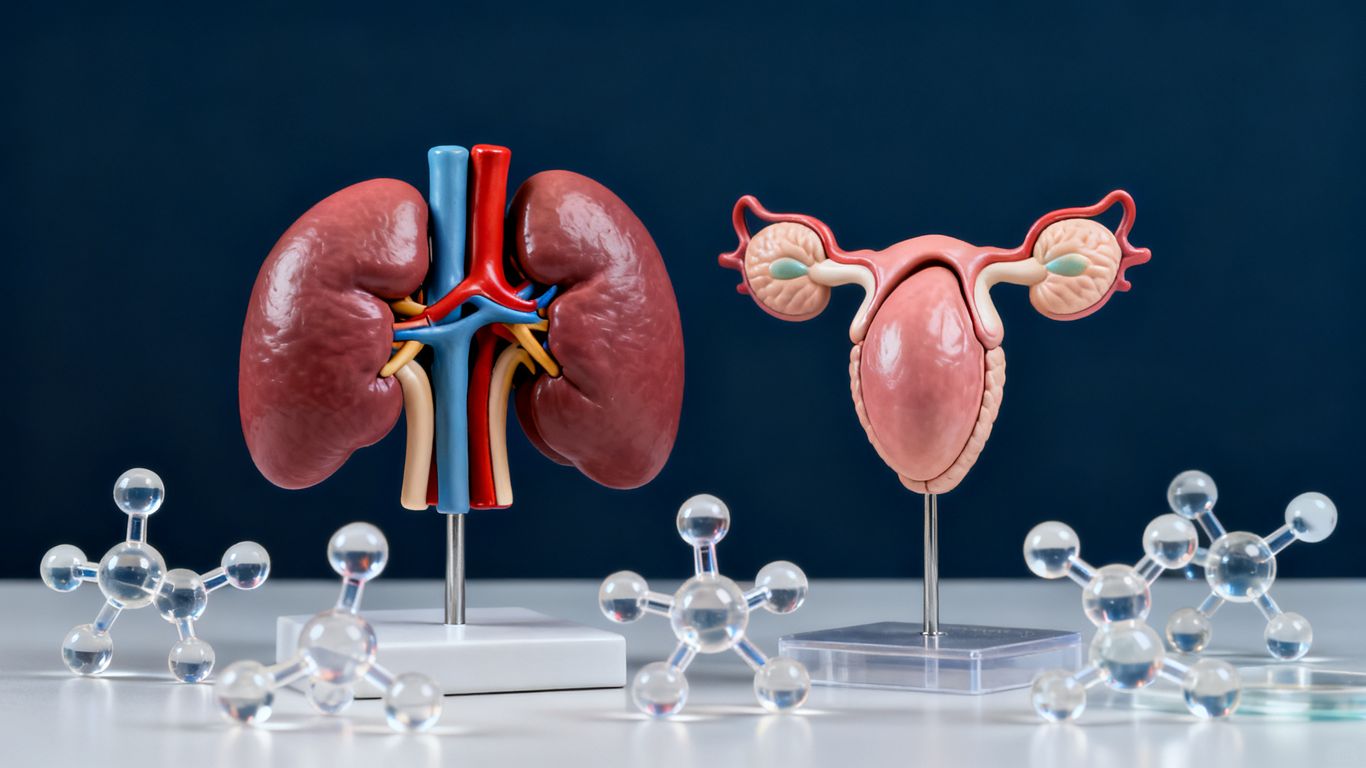
Hormone production in the testes, ovaries, and adrenal glands
The testes, ovaries, and adrenal glands all contribute to androgen production. The hypothalamus and pituitary help regulate gonadal output through coordinated hormonal signals. Adrenal androgens follow partly different pathways and may remain relevant when gonadal production changes.
Production also shifts with age, puberty, pregnancy, menopause, illness, body composition, and certain medicines. A single result therefore reflects a moment within a changing system. Clinicians look for patterns rather than treating every variation as disease.
Androgen receptors and cellular signaling
Androgens enter cells and can bind androgen receptors. The receptor then influences gene activity and changes how that cell behaves. Receptor distribution helps explain why hair follicles, muscle, bone, brain, and reproductive tissues respond differently.
Signal strength depends on hormone concentration, receptor function, local enzymes, and competing signals. Consequently, two people with similar blood levels may experience different effects. Biology often depends as much on tissue response as on circulating hormone.
Testosterone conversion into DHT and estradiol
Some tissues convert testosterone into DHT, while others convert it into estradiol through aromatase. DHT often has stronger effects in androgen-sensitive tissues. Estradiol, although commonly called an estrogen, supports bone, brain, and reproductive health in all sexes.
These conversions mean testosterone can act indirectly. A blood test measures circulating hormone, not every local transformation inside tissues. This helps explain why symptoms sometimes resist a simple testosterone-based explanation.
Roles in development, metabolism, and reproductive health
Androgens contribute to puberty, sexual development, sperm production, bone maintenance, muscle development, and red blood cell production. They also interact with metabolism, mood, energy, and sexual function. Effects vary by life stage and by the amount of hormone available.
They also interact with estrogen pathways and broader endocrine feedback loops. A detailed androgen biology review discusses these overlapping roles. Hormones rarely operate as isolated switches, so clinicians consider the wider system.
The main differences between androgen and testosterone
The phrase androgen vs testosterone compares a category with one member of that category. That comparison resembles asking about fruit versus an apple. Both terms relate to hormone action, but they carry different levels of meaning.
The difference matters during testing and diagnosis. A testosterone result may provide valuable information, yet it cannot summarize every androgen pathway. Careful wording prevents unnecessary concern and avoids false reassurance.
Scope: hormone family versus individual hormone
Androgen refers to a family that includes testosterone, DHT, DHEA, and other related compounds. Testosterone refers to one specific steroid hormone within that family. Doctors may use the broader term when discussing overall activity or a suspected pathway problem.
The narrower term fits a particular test, symptom pattern, or treatment. This distinction also clarifies why androgen excess can involve more than elevated testosterone. The suspected source determines which hormones deserve attention.
Differences in potency and biological effects
Different androgens bind receptors with different strengths and appear at different concentrations. DHT can exert strong effects in some tissues, while DHEA often acts as a precursor. Testosterone produces direct effects and supplies material for other hormones.
Potency does not equal overall importance. A hormone with strong receptor activity in one tissue may have little effect elsewhere. Clinical meaning depends on concentration, conversion, receptors, and timing together.
How tissues respond to different androgens
Tissues contain distinct enzymes and receptor patterns. Hair follicles, prostate tissue, muscle, bone, and reproductive organs therefore handle androgens differently. Local conversion can create a tissue-level effect that blood testing does not fully reveal.
For instance, a person may notice hair or skin changes without a dramatic testosterone shift. That pattern does not prove a diagnosis, but it shows why tissue response matters. Clinicians combine examination findings with targeted tests.
Why testosterone levels do not represent all androgen activity
Testosterone remains an important marker, but it represents only one part of androgen biology. DHT, DHEA, adrenal precursors, receptor sensitivity, and enzyme activity may also influence symptoms. A normal testosterone result can coexist with another endocrine issue.
A broader comparison of androgens and testosterone can clarify the terminology. Still, treatment decisions require individualized medical reasoning rather than a single number.
What testosterone and androgen levels can indicate
Hormone levels can offer clues about production, conversion, or regulation. They cannot diagnose a disorder without symptoms, examination findings, and appropriate repeat testing. Results also mean different things across sexes and life stages.

Common signs of low testosterone
Low testosterone may accompany reduced sexual desire, erectile difficulty, fatigue, lower muscle mass, reduced bone density, or mood changes. Some people notice fewer spontaneous erections or changes in body hair. These symptoms overlap with sleep problems, depression, chronic illness, medication effects, and normal aging.
A low result does not automatically establish androgen deficiency. Clinicians usually seek consistent symptoms and repeat morning measurements. They also investigate whether illness or treatment temporarily lowered the value.
Symptoms associated with androgen excess
Androgen excess may cause acne, increased facial or body hair, scalp hair thinning, irregular periods, or infertility. In some cases, the voice deepens or muscle changes become more pronounced. The speed and severity of change can help guide evaluation.
In women, high testosterone can reflect ovarian, adrenal, medication-related, or rarely tumor-related causes. A focused high testosterone guide explains why biochemical results and visible symptoms both matter. Rapid or severe changes deserve prompt medical attention.
Sex-specific differences in normal hormone patterns
Hormone levels normally differ between males and females, but each group contains substantial individual variation. Levels change with puberty, pregnancy, menopause, age, sleep, illness, and medication. Reference intervals must therefore match the person and the assay.
The body also produces androgens in all sexes. A result outside one laboratory’s range may not carry the same meaning elsewhere. Clinicians interpret values within biological and clinical context.
Why symptoms alone cannot confirm a hormone disorder
Fatigue, acne, hair changes, low libido, and mood shifts have many possible causes. Symptoms can justify testing, but they cannot identify the affected hormone by themselves. Testing without context can also create confusing or misleading results.
A careful evaluation reviews symptom timing, menstrual or reproductive history, medicines, sleep, nutrition, and relevant medical conditions. This approach reduces the chance of treating an unrelated problem with hormones.
How hormone levels are tested and interpreted
Clinicians choose tests according to the suspected problem. Testosterone may provide a starting point, while other measurements help explain production or binding. Results need proper timing and laboratory context.
The goal involves more than finding a number outside a printed range. A useful interpretation asks whether the result fits symptoms, physiology, and repeated measurements. That process often prevents premature treatment.
Total testosterone versus free testosterone
Total testosterone measures hormone that circulates both bound to proteins and unbound. Free testosterone measures the small fraction that remains more readily available to tissues. Sex hormone-binding globulin and albumin affect this balance.
A person can have an ordinary total level but an unusual free level. Conversely, a low total result may not reflect the same biological availability in every person. Clinicians select and interpret these tests together.
Other tests used to assess androgen activity
Additional tests may include DHEA sulfate, androstenedione, SHBG, luteinizing hormone, follicle-stimulating hormone, estradiol, and 17-hydroxyprogesterone. The selection depends on symptoms and the suspected source. No universal panel suits every patient.
The following examples show how testing can support different clinical questions:
- Testosterone can assess one major circulating androgen.
- DHEA sulfate can provide information about adrenal androgen production.
- SHBG can help interpret hormone availability.
- Luteinizing and follicle-stimulating hormones can clarify gonadal regulation.
These tests offer clues rather than standalone diagnoses. A clinician decides which combination best fits the person’s presentation.
Timing, medications, and health factors that affect results
Testosterone often varies during the day, so clinicians may request a morning sample. Acute illness, poor sleep, heavy training, calorie restriction, and stress can alter results. Medicines and supplements can also affect hormone production or measurement.
Patients should share all prescribed medicines, over-the-counter products, and performance-enhancing substances. For example, concerns about unsupervised anabolic steroid risks illustrate why online dosing advice can be unsafe. Never stop a prescribed medicine without medical guidance.
Why reference ranges vary between laboratories
Laboratories use different assays, equipment, populations, and statistical methods. Their reference intervals may therefore differ. Age, sex, pregnancy status, and assay quality also affect interpretation.
A result near a cutoff deserves careful review rather than a rigid label. Clinicians may repeat testing through the same laboratory or use a more suitable method. The report should always accompany the result during consultation.
Conditions linked to androgen imbalance
Androgen imbalance can result from problems in the testes, ovaries, adrenal glands, pituitary, hypothalamus, enzymes, or receptors. Some conditions lower hormone production, while others raise production or alter tissue sensitivity. The same symptom may appear in several disorders.
Diagnosis usually combines history, physical examination, laboratory testing, and sometimes imaging. The underlying cause matters because treatment differs substantially. Self-directed hormone use can obscure the original pattern.
Hypogonadism and testosterone deficiency
Hypogonadism occurs when the body cannot produce enough sex hormones or cannot signal production normally. Causes may involve the testes, pituitary, hypothalamus, chronic illness, medicines, or genetic conditions. Symptoms can affect sexual function, fertility, bones, muscles, and wellbeing.
Low testosterone alone does not prove androgen deficiency. A clinician usually confirms the pattern with symptoms and repeat testing. The androgen deficiency explanation also highlights why temporary illness can complicate interpretation.
Polycystic ovary syndrome and elevated androgens
Polycystic ovary syndrome can involve elevated androgens, irregular ovulation, acne, excess hair, and metabolic concerns. Not everyone has the same features, and other causes must be excluded. Testosterone may rise, but adrenal androgens can also contribute.
Clinicians assess menstrual history, physical findings, laboratory results, and overall health. They may also consider fertility goals and risks linked with untreated metabolic problems. Diagnosis should follow established clinical criteria rather than one isolated test.
Congenital adrenal hyperplasia and adrenal disorders
Congenital adrenal hyperplasia describes inherited enzyme problems that change adrenal steroid production. Some forms increase androgen production and may affect development, puberty, menstruation, or fertility. Other adrenal disorders can also alter androgen levels.
Testing may include 17-hydroxyprogesterone and additional adrenal hormones. The pattern, age of onset, family history, and symptom severity guide further evaluation. Sudden virilizing symptoms require prompt assessment.
Androgen insensitivity syndrome and receptor changes
Androgen insensitivity syndrome occurs when cells cannot respond normally to androgens. The body may produce testosterone, yet receptor changes limit its effects. The presentation varies according to the degree of receptor function.
This condition demonstrates a central principle: hormone concentration does not guarantee hormone action. Care often involves an experienced multidisciplinary team. Patients deserve clear information, privacy, and respectful support during evaluation.
Treatment considerations and when to seek medical advice
Treatment depends on the cause, symptoms, goals, age, reproductive plans, and overall health. Clinicians first confirm the pattern and address reversible contributors when possible. Hormones should not serve as a general remedy for unexplained symptoms.
A safe plan includes realistic expectations and follow-up. It also considers fertility, cardiovascular health, blood counts, sleep, mood, and other relevant factors. Individual assessment matters more than online protocols.
Testosterone replacement therapy and its limitations
Testosterone replacement therapy may help selected people with confirmed deficiency and compatible symptoms. It does not treat every cause of fatigue, sexual difficulty, or low mood. Treatment can also suppress sperm production and may not suit people pursuing fertility.
Evaluation should precede treatment, followed by monitoring of symptoms and safety markers. A professional testosterone therapy guide explains why clinicians personalize delivery methods, dosing, and follow-up. Patients should discuss benefits and limitations before starting.
Treatments for unwanted androgen effects
Treatment for androgen excess depends on its cause and the person’s goals. Options may include hormonal contraception, medicines that reduce androgen effects, acne treatment, hair-removal methods, or treatment for an adrenal or ovarian condition.
Clinicians may combine approaches because symptoms improve at different rates. Cosmetic treatments can address appearance while medical treatment addresses the hormone pathway. Fertility plans should shape every decision.
Potential risks of changing hormone levels
Hormone treatment can affect fertility, acne, hair, mood, blood counts, cholesterol, sleep apnea, and other health measures. Unsupervised anabolic products add uncertainty about dose, purity, interactions, and suppression of natural production. Abrupt changes can also complicate later testing.
Risks vary with the person, preparation, dose, duration, and medical history. A clinician can explain warning signs and arrange appropriate monitoring. Online anecdotes cannot predict an individual response.
When an endocrinologist or other clinician may be needed
Seek medical advice for persistent symptoms, abnormal repeat results, rapid hair or voice changes, severe acne, infertility, or unexplained menstrual changes. An endocrinologist may help when results remain unclear or when a complex gland disorder seems possible.
Primary care clinicians, gynecologists, urologists, dermatologists, and reproductive specialists may also contribute. Bring test reports, symptom dates, medicines, and supplement details. Even unrelated wellness choices, such as an ergonomic pillow guide, cannot replace evaluation of persistent endocrine symptoms.
Conclusion
Androgen describes a family of hormones, while testosterone identifies one important member. Understanding that distinction helps people interpret symptoms and tests more carefully. Medical evaluation should connect laboratory results with tissue biology, life stage, health history, and personal goals.
Frequently Asked Questions
Is testosterone an androgen?
Yes. Testosterone is one of the main androgens, alongside hormones such as DHT, DHEA, and androstenedione.
Are androgens found in women?
Yes. Women produce and use androgens through the ovaries, adrenal glands, and hormone-conversion pathways.
Does a normal testosterone result rule out androgen problems?
No. Other hormones, tissue conversion, receptor sensitivity, or binding proteins may still affect androgen activity.
What symptoms can low testosterone cause?
Possible symptoms include low sexual desire, fatigue, erectile difficulty, reduced muscle mass, mood changes, and lower bone density.
What can high androgen levels cause?
Possible effects include acne, excess facial or body hair, scalp hair thinning, irregular periods, infertility, or rapid virilizing changes.
Why do clinicians repeat hormone tests?
Hormone levels vary with timing, illness, medicines, sleep, and laboratory methods. Repeating a test can confirm whether an unusual result persists.
Should someone take testosterone without testing?
No. Testosterone can create important risks and may hide the underlying cause of symptoms. A qualified clinician should guide evaluation and treatment.